The Best Diet Is the One You Stick To: What the Research Says
11.17.2026
8 min read
16 views
Short answer: large studies comparing low-carb, low-fat and popular named diets (Atkins, Zone, Weight Watchers, Ornish) find only small differences in how much weight people lose. What consistently predicts results is adherence: how well people keep following the diet. So the best diet for weight loss is the one you can keep eating for months. For most people, that means a moderate calorie target built around foods they already like.
What the studies found
Study
What it compared
Main finding
Dansinger et al., JAMA 2005
Atkins, Zone, Weight Watchers, Ornish; 160 adults, 1 year
Weight loss was linked to adherence, not to diet type
Alhassan et al., Int J Obes 2008
Atkins, Zone, Ornish; 181 women, 1 year
In every diet group, the most adherent third lost the most weight
Sacks et al., NEJM 2009
4 diets with different fat, protein and carb levels; 811 adults, 2 years
Similar weight loss whichever macronutrients were emphasized
Gardner et al., JAMA 2018 (DIETFITS)
Healthy low-fat vs healthy low-carb; 609 adults, 1 year
No significant difference: −5.3 kg vs −6.0 kg
Johnston et al., JAMA 2014
Meta-analysis of 48 trials, 7,286 people
Differences between named diets were small
Four popular diets, one deciding factor
In the Dansinger trial, 160 adults were randomly assigned to Atkins, Zone, Weight Watchers or Ornish for one year. Only 50% to 65% of each group completed the year. Average weight loss was modest in all four groups (2.1 to 3.3 kg). The amount of weight lost was clearly linked to how closely people said they followed their diet (r = 0.60), and almost not at all to which diet they were on (r = 0.07).
A follow-up analysis of the A TO Z study found the same pattern. Among women following Atkins, the most adherent third lost 8.3 kg in a year, while the least adherent third lost 1.9 kg. The Ornish group showed a similar gap (6.5 kg vs 1.7 kg). The authors concluded that helping people stick to a diet may matter more than the diet's exact mix of carbs, fat and protein.
Changing the macronutrients didn't change the result
The POUNDS Lost trial followed 811 adults on four reduced-calorie diets with different amounts of fat, protein and carbohydrate. After 6 months, every group had lost about 6 kg on average. People started regaining after a year, and at 2 years the results were still similar across diets (2.9 to 3.6 kg). Hunger, fullness and satisfaction were also similar. What did stand out was attendance: each counseling session attended was linked to about 0.2 kg of extra weight loss.
DIETFITS tested a healthy low-fat diet against a healthy low-carb diet in 609 adults for a year. Weight change was −5.3 kg and −6.0 kg, with no significant difference between groups. The researchers also checked whether genetics or insulin response could predict which diet would work better for whom. Neither did.
The big picture
A meta-analysis of 48 randomized trials (7,286 people) found that both low-carb and low-fat diets produced meaningful weight loss compared with no diet, about 7 to 9 kg. The differences between individual named diets were small. For example, Atkins beat Zone by about 1.7 kg at 6 months. The authors said this supports recommending whichever diet a person will actually stick to.
Why people stop following diets
If adherence decides results, the useful question is what makes people quit. Common reasons include:
All-or-nothing rules. In a study of more than 54,000 people in a weight loss program, rigid dieting (strict bans, all-or-nothing thinking) went with more binge eating and a higher BMI. Flexible control went with a lower BMI and a higher chance of losing weight successfully over the year.
Food you don't enjoy. Eating meals you dislike takes willpower every day, and willpower runs out.
A deficit that is too big. Very low calorie targets bring strong hunger, which makes the plan hard to keep up.
Plans that don't fit real life. Family dinners, eating out and busy days break plans that leave no room for them.
How to build a diet you will stick to
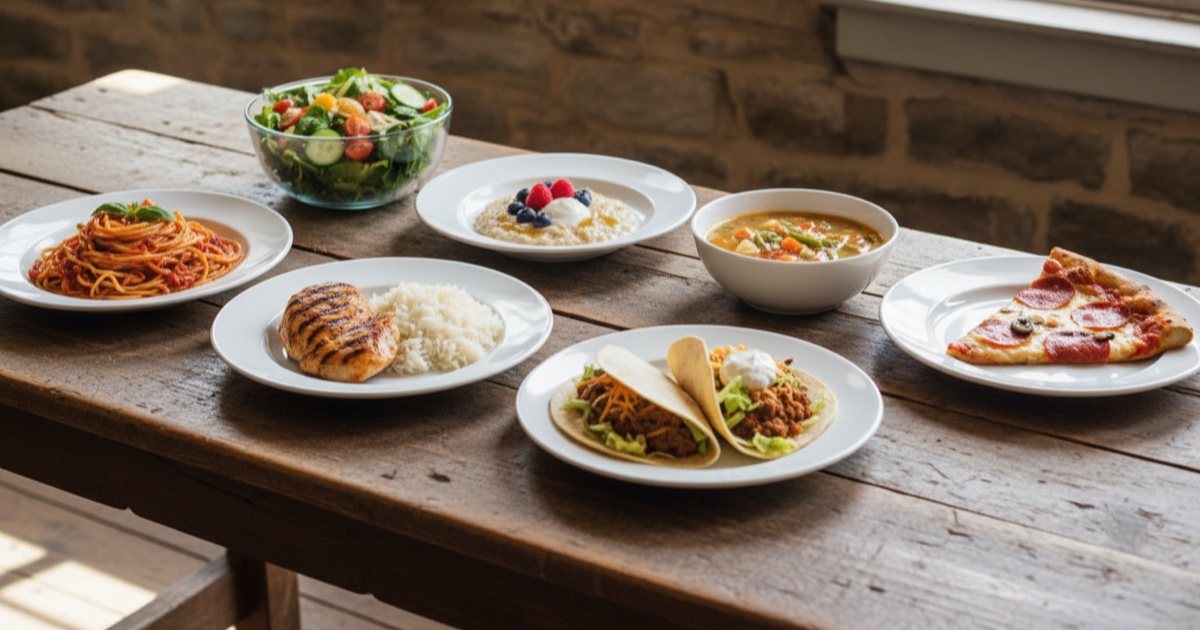
Start with foods you already like. Build your meals from them instead of from a list of foods you don't enjoy. Our guide on how to make a diet plan with foods you like shows the full method with a worked example.
Pick a moderate deficit. Around 500 calories below your daily burn is a common starting point. Use the TDEE calculator and the calorie deficit calculator to set your number.
Use portions, not bans. Plan your favorite foods into the week in set amounts instead of cutting them out.
Get enough protein. It helps with fullness during a deficit. The protein calculator gives you a target.
Make tracking easy, and count off-plan meals instead of treating them as failures. One meal off the plan does not ruin the week. Log it and carry on.
Check in regularly. In POUNDS Lost, people who kept showing up lost more. A regular routine of reviewing your progress has a similar effect.
A quick test for any diet
Before you start a diet, ask yourself:
Could I still be eating this way six months from now?
Does it include the foods I would miss most?
Can I follow it at a restaurant or a family dinner?
Does it fit my budget and the time I have for cooking?
If the answer to any of these is no, change the plan before you start. Don't count on willpower to carry you through it.
How EatLog puts this into practice
EatLog is built around adherence. EatLog builds a meal plan from foods you actually like, with portions sized to your calorie target. You choose the foods from the list, and EatLog works out how much of each one fits your day. When you eat something that is not on the plan, you photograph the plate, and EatLog estimates the calories and macros and logs them, so a meal out does not break your tracking.
Research comparing popular diets finds only small differences in weight loss between them. The best diet is the one you can follow consistently, which for most people means a moderate calorie deficit built around foods they enjoy.
Is low-carb better than low-fat for weight loss?
Not by much. In the DIETFITS trial, people on a healthy low-carb diet lost 6.0 kg in a year and people on a healthy low-fat diet lost 5.3 kg. The difference was not statistically significant. Choose the approach that suits the way you like to eat.
Why do most diets fail?
Most diets fail because people stop following them. Strict all-or-nothing rules, food people do not enjoy, very large calorie deficits and plans that do not fit everyday life all make a diet harder to keep up.
Is there an app that makes a diet easier to stick to?
EatLog is designed for this. It builds your meal plan from foods you choose and sizes the portions to your calorie target, and meals that are not on the plan can be logged with a photo.
References
Dansinger ML, et al. Comparison of the Atkins, Ornish, Weight Watchers, and Zone diets for weight loss and heart disease risk reduction: a randomized trial. JAMA. 2005;293(1):43-53. PubMed
Alhassan S, et al. Dietary adherence and weight loss success among overweight women: results from the A TO Z weight loss study. Int J Obes. 2008;32(6):985-991. PubMed
Sacks FM, et al. Comparison of weight-loss diets with different compositions of fat, protein, and carbohydrates. N Engl J Med. 2009;360(9):859-873. PubMed
Gardner CD, et al. Effect of low-fat vs low-carbohydrate diet on 12-month weight loss in overweight adults: the DIETFITS randomized clinical trial. JAMA. 2018;319(7):667-679. PubMed
Johnston BC, et al. Comparison of weight loss among named diet programs in overweight and obese adults: a meta-analysis. JAMA. 2014;312(9):923-933. PubMed
Westenhoefer J, Stunkard AJ, Pudel V. Validation of the flexible and rigid control dimensions of dietary restraint. Int J Eat Disord. 1999;26(1):53-64. PubMed
This article is general information, not medical advice. If you have a health condition, are pregnant or take medication, talk to a doctor or registered dietitian before changing your diet.
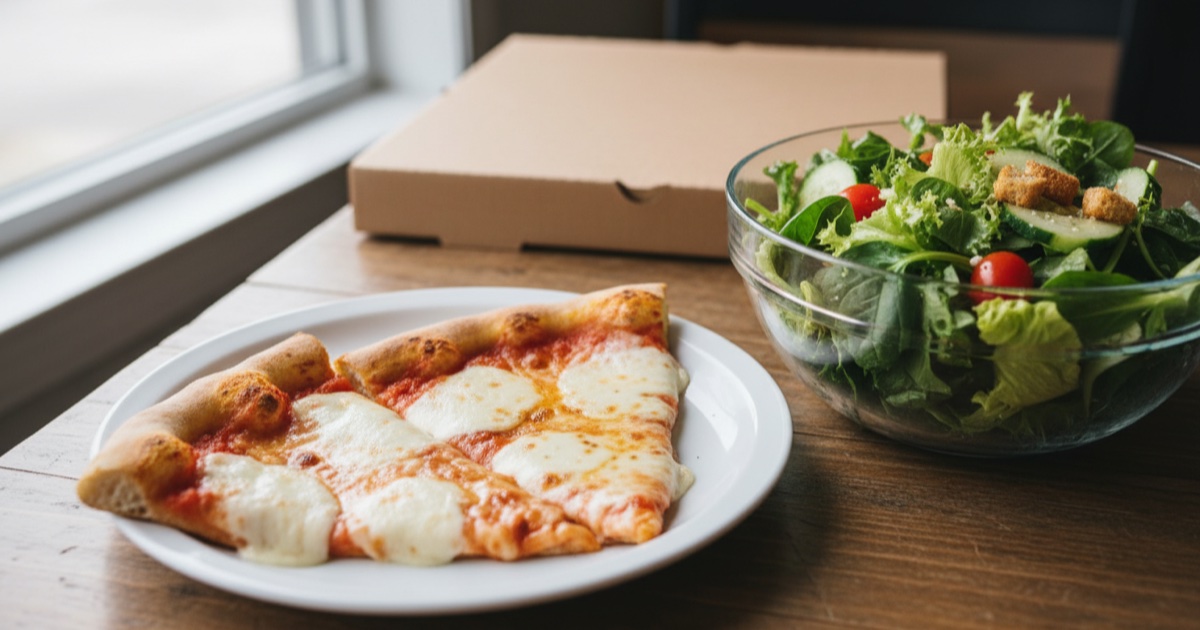
Yes, if the portion fits your calorie target. Here are the calories in a slice of pizza by crust and topping (USDA data), how many slices fit into a dinner, and how to keep pizza night in your week.
We compared EatLog, Fitia, Eat This Much, Mealime and MyFitnessPal on one question: can you build a meal plan from foods you actually like, with portions that fit your calorie target?
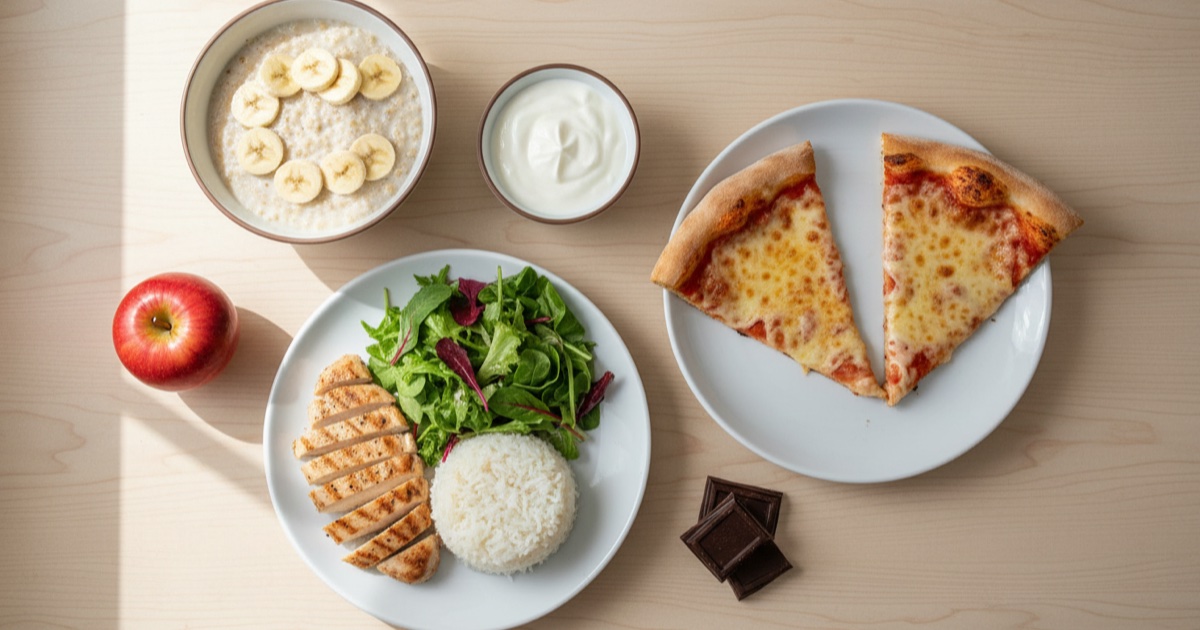
Build a diet plan around foods you enjoy: find your calorie target, pick your favorites and size the portions to fit. Includes a worked 1,800-calorie example day with pizza in it.
We use cookies to improve your experience, analyze website traffic, and provide personalized content. You can accept all cookies or manage your preferences. Privacy Policy
Cookie Settings
Choose which cookies you allow. You can change this at any time.
Required for core site functionality such as page routing, language selection and security. These cannot be turned off.
Cookie table
Cookie
Type
Expiration
PHPSESSID
Native to PHP. Stores the session identifier used for contact form rate limiting and spam protection.
Session
eatlog_cookie_consent
Stores your cookie preferences so this dialog is not shown again on your next visit.
6 months
eatlog_lang
Remembers the language you picked from the language menu, so the home page takes you to that version. Only set when you choose a language.
6 months
Help us understand how visitors use the site so we can improve it. Includes Google Analytics.
Cookie table
Cookie
Type
Expiration
_ga
Google Analytics. Distinguishes visitors by assigning a randomly generated identifier.
2 years
_ga_T9F0K4TDT0
Google Analytics. Persists session state so visits can be measured for this property.
2 years
Used to measure campaign performance and show more relevant ads.
Cookie table
Cookie
Type
Expiration
_gcl_au
Google Ads. Measures ad conversions, i.e. whether a visit that came from an ad ended in a download.
90 days
_gcl_aw
Google Ads. Stores the click identifier of the ad that brought you to the site.
90 days
Remember your choices, such as preferred language or interface settings.
Cookie table
This category does not currently set any cookies on this site.